
 Author: UCO Aero
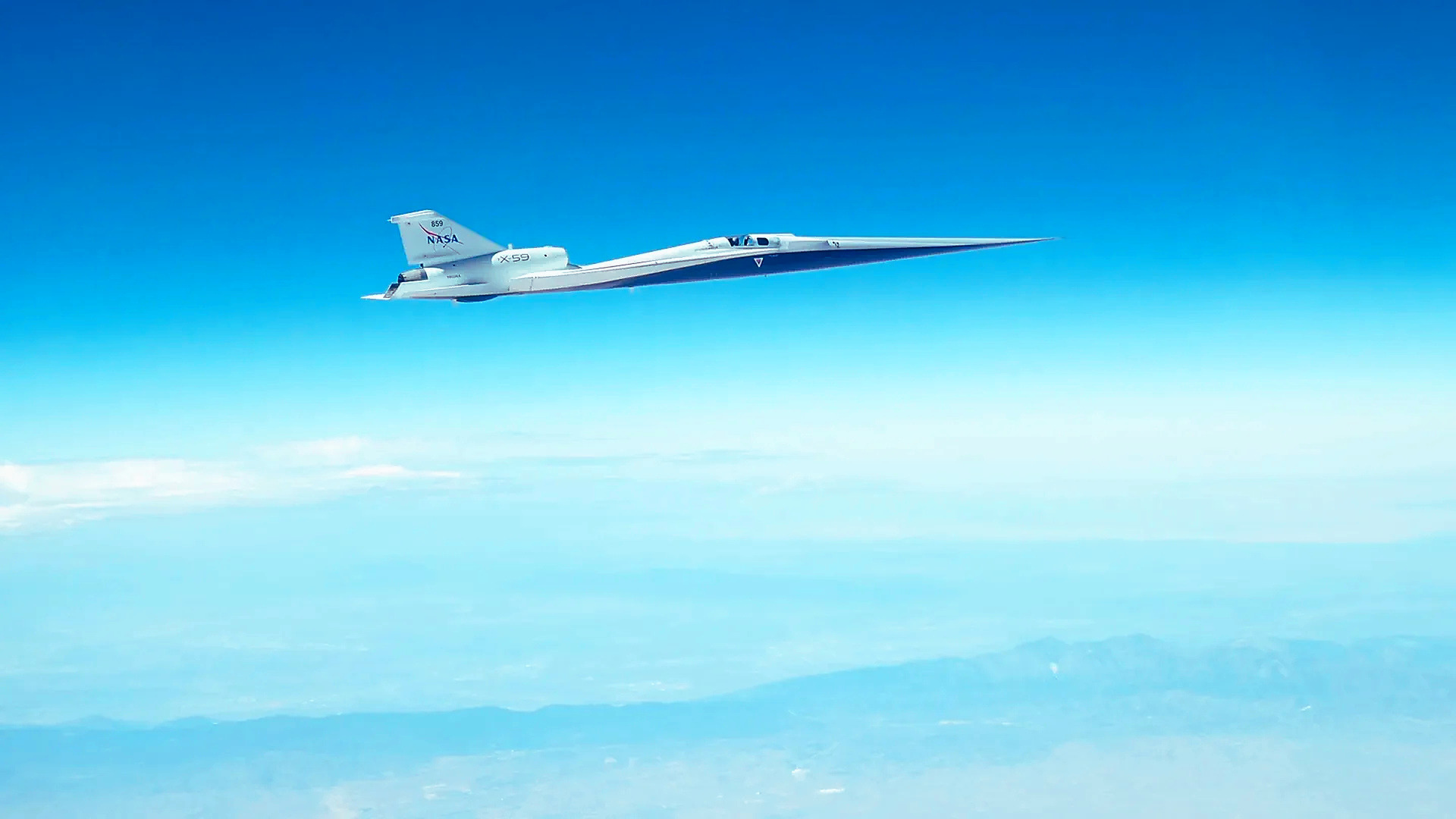
NASA’s X-59 is not just another experimental aircraft. It is a test of whether supersonic flight can become acceptable again over land by changing the way the aircraft’s shockwaves reach people on the ground.
The classic sonic boom is one of aviation’s most dramatic side effects: a loud, sharp pressure wave created when an aircraft travels faster than sound. The X-59 is designed around a different goal — shaping those pressure waves so the sound heard on the ground is closer to a quieter “thump.”
The engineering target is not only speed. It is public acceptance. The X-59 is trying to prove that aircraft shape, acoustics, flight testing and community response data can together influence the future rules of supersonic travel.
Why this aircraft looks so unusual
The X-59’s long, narrow nose and carefully shaped body are not just visual drama. They are part of the aircraft’s attempt to control how shockwaves form and combine. Instead of allowing a strong boom to arrive at the ground, the aircraft is shaped to spread the acoustic signature into something quieter.
This makes the X-59 a career case study in aerodynamics, structures, flight testing, acoustics, instrumentation, certification and public policy.

Why this matters for aerospace careers
The X-59 story shows that aerospace progress is rarely about one discipline. A single experimental aircraft can involve aerodynamic shaping, composite structures, test piloting, sensor systems, data acquisition, human response studies and regulatory strategy.
Skills connected to this story
- Compressible aerodynamics and shockwave behavior.
- Aircraft design and stability considerations.
- Acoustics, noise measurement and community response studies.
- Flight testing, instrumentation and data analysis.
- Certification, regulation and aviation policy.
Career takeaway
If you are interested in aircraft design, do not study only the shape of the aircraft. Study the system around it: the physics, the public, the data and the regulation. The future of flight depends on all of them.