
 Author: UCO Aero
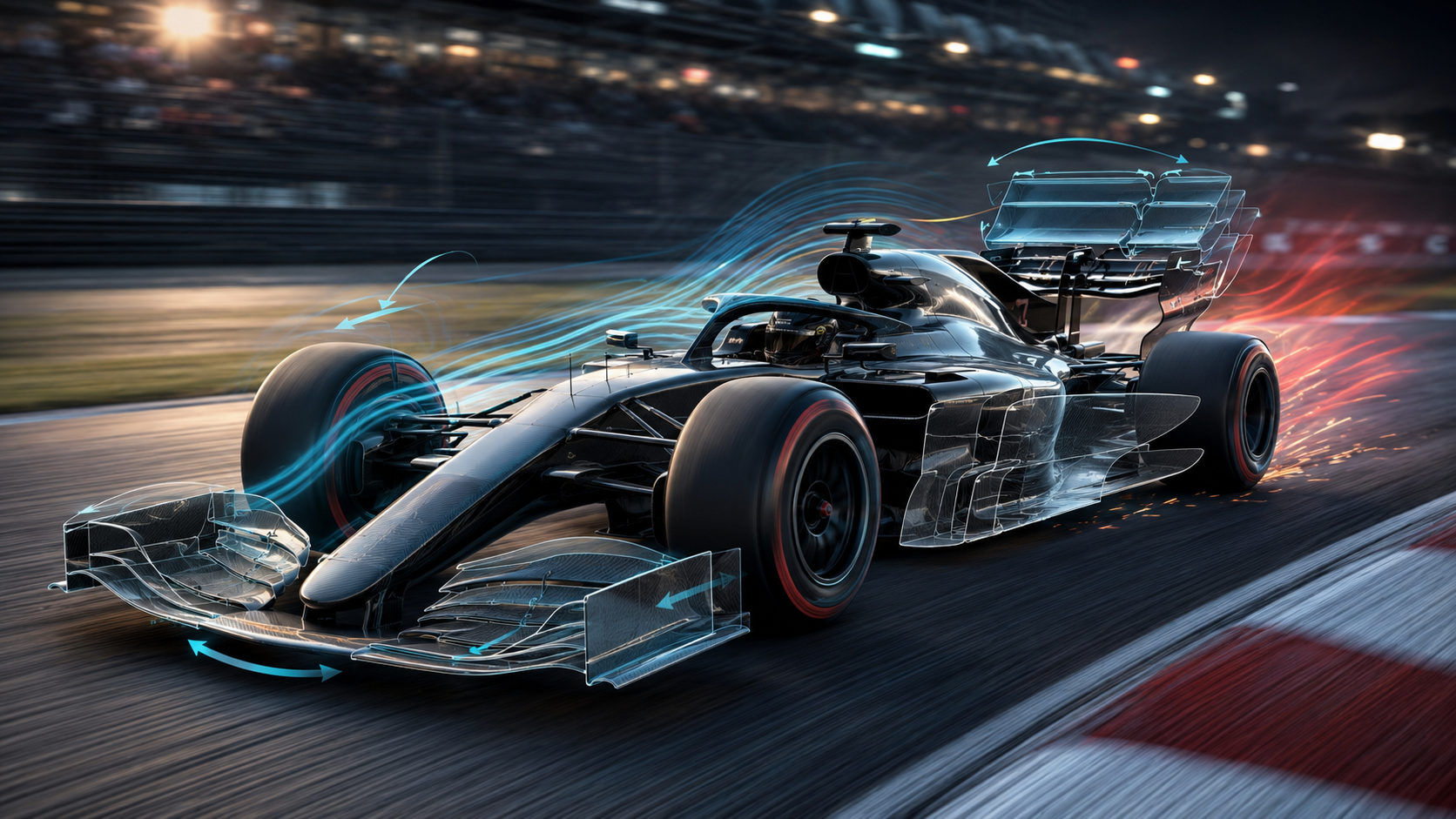
For years, Formula 1 fans have watched rear wings open on straights through DRS. But the 2026 technical era pushes the idea further. Active aerodynamics makes the car’s shape part of the race strategy, not just a fixed design chosen before the lights go out.
The headline idea is simple: the car behaves differently depending on what the driver and system need. Low-drag configurations help on straights. Higher-downforce configurations help in corners. The car becomes a moving compromise between speed, grip, energy and control.
In the 2026 F1 era, the race car is no longer just driven. It is continuously managed as an adaptive aerodynamic and energy system at racing speed.
Why active aerodynamics changes the engineering problem
Race cars have always been aerodynamic machines, but active aero changes the design question. Engineers must think not only about the best shape, but also when and how the shape should change.
That connects aerodynamics with control systems, sensors, simulation, power-unit behavior, driver input and race strategy. It also creates new challenges around reliability, safety and rules compliance.

Why this matters beyond Formula 1
Motorsport often compresses engineering problems into extreme conditions. Active aerodynamics, energy deployment and sustainable fuels connect to broader themes in automotive, aerospace, simulation and mobility engineering.
Skills connected to this story
- Aerodynamics, drag reduction and downforce management.
- Vehicle dynamics and race strategy.
- Control systems, sensors and actuation.
- Hybrid power units and energy deployment.
- Sustainable fuel technology and performance constraints.
Career takeaway
If you want to work in motorsport, do not look only at the car’s bodywork. Look at the system: the airflow, the software, the driver, the regulations, the energy and the data. The modern race car is a moving engineering ecosystem.