
Why Human Factors Matter
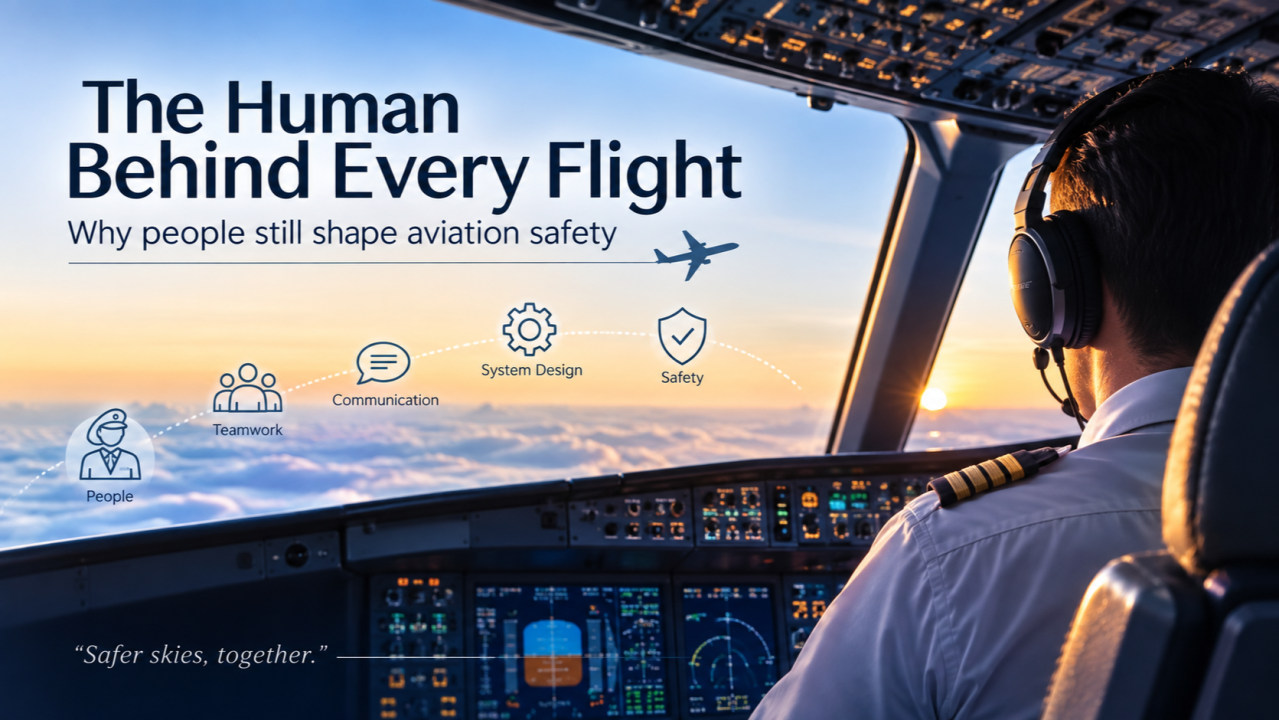
Human factors is a multidisciplinary field that applies knowledge of human capabilities and limitations to equipment, systems, procedures, work environments and organisations. In aviation, that means looking beyond individual performance and asking whether a system gives people the information, training, tools and procedures they need to work safely. The Federal Aviation Administration (FAA) says human factors work can address issues including workload, fatigue, communication, equipment design, procedures and organisational factors.
People and Technology Must Work Together
Automation can handle many tasks, but it does not remove the need for human judgement. Pilots still need to understand what flight-deck systems are showing and respond when conditions change. Human factors therefore consider how people interact with displays, controls, alerts, automation and procedures. A system can be technically advanced and still create problems if its information is difficult to understand or if its design does not match how people actually work.
Safety Is a System, Not One Person
An aircraft does not become safe because of one job role. Pilots, air traffic controllers, dispatchers, cabin crew, maintenance technicians, ground teams, engineers and safety specialists contribute at different stages of a flight. Their work depends on communication and accurate information passing between people and systems. This is why human factors treats safety as a system issue rather than simply assigning blame when something goes wrong.
A Practical Example: Checklists and Crew Coordination
One practical way to manage human limitations is to build reliable procedures around them. Checklists can help people confirm that required steps have been completed, while crew resource management (CRM) focuses on communication, coordination and the effective use of available resources. In maintenance, clear handovers and records can also reduce uncertainty about what work has been completed and what remains. These tools do not replace professional judgement; they help make important information easier to track and communicate.
Understanding the Dirty Dozen
In aviation maintenance, the FAA uses the term “Dirty Dozen” for 12 common maintenance-related causes of errors. They include lack of communication, complacency, lack of knowledge, distraction, lack of teamwork, fatigue, lack of resources, pressure, lack of assertiveness, stress, lack of awareness and norms. The list is useful because it shifts attention from a single mistake to the conditions surrounding the work. For example, fatigue or distraction can affect performance, while poor communication can make it harder for a team to know what has already been done.
Design Can Reduce the Consequences of Error
Human factors do not assume that people will never make mistakes. Instead, it asks how systems can make errors less likely and their consequences less severe. Better procedures, clearer displays, appropriate training, communication practices and fatigue-risk controls can all be part of that approach. The FAA describes fatigue-risk management as a way for aviation organisations to identify and manage fatigue hazards rather than treating fatigue as only an individual problem.
What the Numbers Mean
The FAA Human Factors Division states that human error has been identified as a factor in two-thirds to three-fourths of recent aviation accidents and incidents. This figure should not be read as a current global accident rate or as evidence that people alone cause those events. The FAA uses it to explain why understanding human performance, procedures, equipment design, training and organisational conditions is important to aviation safety.
Career Takeaway
Aviation human factors connect to practical careers beyond the cockpit. Students can explore roles such as human-factors engineer, aviation safety specialist or investigator, maintenance human-factors specialist, flight-deck systems engineer, aviation psychologist, air traffic systems specialist and quality or safety roles. Useful skills include systems thinking, technical communication, data analysis, procedure design, risk assessment and an understanding of how people interact with complex technology.
Useful Statistics
The FAA Human Factors Division states that human error has been identified as a factor in two-thirds to three-fourths of recent aviation accidents and incidents. This is an FAA statement about recent accidents and incidents considered in its human-factors work; it should not be presented as a current global accident rate.